Changes in reading habits, squinting or frequent eye rubbing can raise questions about a child’s vision. These observations do not diagnose a vision problem, but they are useful to discuss with an optometrist.
This guide explains signs parents may notice and the role of eye care as children grow. For the appointment itself, see our children’s eye exam information.
Why Children's Eye Exams Are So Important
Children rarely realize they have vision problems because they assume everyone sees the world the same way they do. As a result, many eye conditions go unnoticed until they begin affecting school performance, reading ability, sports participation, or confidence.
Routine comprehensive eye exams allow your optometrist to detect vision problems early, often before parents or teachers notice any signs.
Vision Supports Learning
More than 80 percent of classroom learning depends on vision. Children use their eyes constantly for reading, writing, using computers, and following classroom activities. Even a small vision problem can make learning more difficult.
Early Detection Makes Treatment Easier
Conditions such as lazy eye (amblyopia), crossed eyes (strabismus), focusing problems, and significant refractive errors respond best when diagnosed early.
Healthy Eyes Build Confidence
Children who see clearly often perform better academically, participate more confidently in sports, and enjoy greater comfort during everyday activities.
Routine children's eye exams help ensure your child has the visual skills needed for learning, confidence, and lifelong eye health.
What We Evaluate During a Children's Eye Exam
If you are also arranging care for other family members, explore our family eye care guide.
Every examination is adapted to your child's age, development, and ability to participate. Our goal is to make each visit comfortable while gathering the information needed to protect your child's vision.
- Visual acuity.
- Eye focusing ability.
- Eye coordination and alignment.
- Depth perception.
- Color vision.
- Eye movement.
- Overall eye health.
- Need for glasses if appropriate.
Common Vision Problems in Children
Many childhood vision conditions develop gradually and may not cause obvious symptoms. Regular eye examinations allow these issues to be detected before they begin affecting your child's education, confidence, or daily activities.
Nearsightedness (Myopia)
Children with myopia often struggle to see distant objects clearly. They may squint while watching television, have difficulty seeing the classroom board, or sit very close to screens.
Farsightedness (Hyperopia)
Some children experience difficulty focusing on nearby objects, which may cause headaches, eye fatigue, or reduced attention during reading and homework.
Astigmatism
Astigmatism causes blurred or distorted vision at multiple distances and may affect reading comfort and overall visual performance.
Lazy Eye (Amblyopia)
Lazy eye develops when one eye does not achieve normal vision during childhood. Early diagnosis provides the greatest opportunity for successful treatment.
Crossed Eyes (Strabismus)
Eye misalignment may affect depth perception and visual development. Early evaluation helps determine whether treatment is needed.
Many children with vision problems never complain because they believe their vision is normal. Routine eye exams often detect issues long before parents notice any symptoms.
Signs Your Child May Need an Eye Exam
Although regular examinations are recommended even without symptoms, parents should also watch for signs that may indicate a vision problem.
- Frequent headaches.
- Squinting.
- Sitting too close to screens.
- Holding books very close.
- Rubbing the eyes frequently.
- Covering one eye while reading.
- Difficulty concentrating on schoolwork.
- Poor reading performance.
- Complaints of blurry vision.
- Excessive tearing or eye strain.
| Age | Recommended Eye Exam |
|---|---|
| 6–9 Months | First comprehensive eye examination. |
| 2–5 Years | At least one examination before starting school. |
| School Age | Every year or as recommended by your optometrist. |
School screenings can identify some vision problems but do not replace a comprehensive eye examination performed by an optometrist.
Why Families Choose Moon Optik
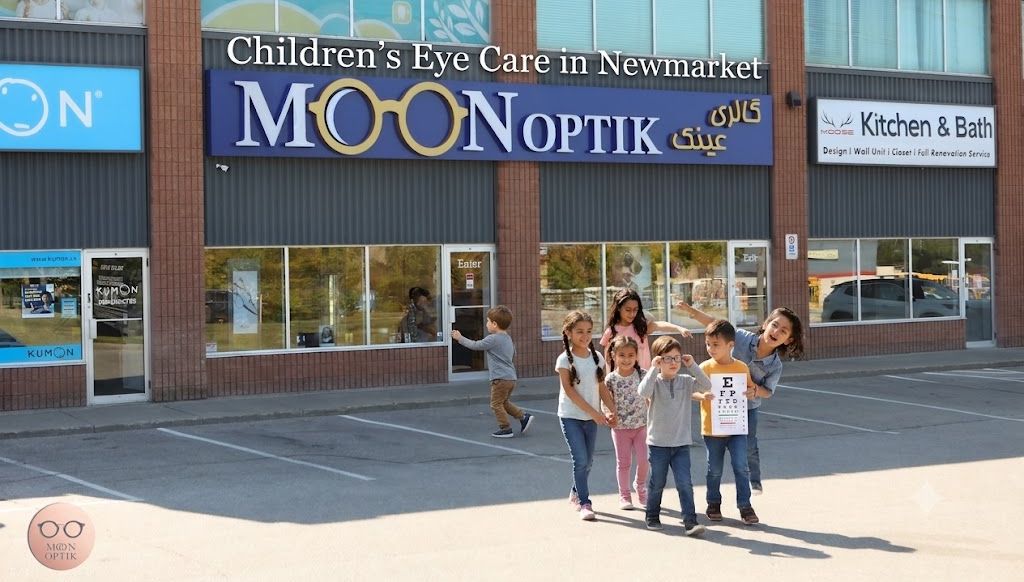
Choosing the right eye care provider for your child means finding a clinic that combines professional expertise with a welcoming environment. At Moon Optik, we understand that children require patience, encouragement, and age-appropriate examinations that help them feel comfortable throughout their visit.
Our team works closely with parents to explain examination findings, answer questions, and provide recommendations that support healthy visual development as children grow.
- Friendly, child-focused eye examinations.
- Experienced optometrists.
- Modern diagnostic technology.
- Comprehensive vision assessments.
- Prescription glasses for children.
- Long-term monitoring of eye health.
- Convenient appointments for families.
- Trusted eye care in Newmarket.
Our mission is to help every child enjoy clear vision, healthy eye development, and the confidence that comes from seeing the world clearly.
Discuss Your Child’s Vision
Write down what you or your child’s teacher have noticed and when it started. Our Newmarket eye care and appointment page explains how to find Moon Optik and request a visit.
Frequently Asked Questions
At what age should my child have their first eye exam?
How often should children have eye exams?
My child passed a school vision screening. Do they still need an eye exam?
What are the signs my child may have a vision problem?
Can children wear glasses if needed?
Key Takeaways
- Regular children's eye exams support healthy learning, development, and lifelong vision.
- Many childhood vision problems develop without obvious symptoms.
- Comprehensive eye examinations evaluate much more than visual clarity.
- Early diagnosis provides the best opportunity for successful treatment of many childhood eye conditions.
- Moon Optik proudly provides trusted children's eye care for families throughout Newmarket.


