Reading, driving and other daily activities can feel different as eyesight changes with age. This guide covers common concerns to discuss with an optometrist and how ongoing eye care can support everyday life.
For appointment details and preparation, explore senior eye exams in Newmarket. Sudden vision loss or severe eye pain needs urgent assessment; do not wait for a routine appointment.
Why Senior Eye Care Is Important
Vision changes are a normal part of aging, but many eye diseases are not. While reading glasses or prescription updates are common, conditions such as glaucoma, cataracts, diabetic retinopathy, and age-related macular degeneration require professional monitoring and early diagnosis.
Comprehensive eye exams allow your optometrist to evaluate both your vision and the health of your eyes, often identifying problems long before they begin affecting your daily life.
Protecting Long-Term Vision
Routine examinations help identify small changes in your eyesight before they become larger problems. Early treatment often slows disease progression and preserves healthy vision.
Maintaining Independence
Clear vision supports safe driving, reading, medication management, mobility, and everyday activities that contribute to an active and independent lifestyle.
Monitoring Overall Health
Your eyes can reveal important signs of diabetes, high blood pressure, vascular disease, and certain neurological conditions. Regular eye exams contribute to your overall healthcare.
Annual comprehensive eye examinations help seniors maintain independence, confidence, and quality of life while protecting their eyesight for the future.
Common Eye Conditions in Older Adults
Several eye conditions become more common with age. Early detection through regular examinations allows appropriate treatment and ongoing monitoring.
Cataracts
Cataracts cause the eye's natural lens to become cloudy, leading to blurred vision, glare, faded colors, and difficulty driving at night.
Glaucoma
Often called the "silent thief of sight," glaucoma typically develops without pain or early symptoms. Regular eye pressure measurements and optic nerve evaluations help detect glaucoma before permanent vision loss occurs.
Age-Related Macular Degeneration (AMD)
AMD affects central vision, making reading, recognizing faces, and driving more difficult. Early diagnosis improves long-term management.
Diabetic Retinopathy
Seniors living with diabetes require routine retinal examinations because diabetic eye disease often progresses without noticeable symptoms during its early stages.
Dry Eye Disease
Dry, irritated, watery, or burning eyes become increasingly common with age. Your optometrist can identify the underlying cause and recommend appropriate treatment.
Many age-related eye diseases develop slowly and painlessly. By the time noticeable vision changes occur, permanent damage may already have taken place. Regular comprehensive eye exams allow early diagnosis when treatment is often most effective.
Signs You Should Schedule an Eye Exam
Even if you already wear glasses, changes in your eyesight should never be ignored. While some vision changes are part of the natural aging process, others may indicate developing eye disease that requires professional attention.
- Blurred or cloudy vision.
- Difficulty reading even with glasses.
- Increased glare when driving at night.
- Difficulty recognizing faces.
- Frequent prescription changes.
- Double vision.
- Flashes of light or new floaters.
- Loss of side vision.
- Eye pain or redness.
- Persistent dry or watery eyes.
What Happens During a Senior Eye Exam?
If you have diabetes, ask whether your visit also needs the assessments described in our diabetic eye exam guide.
A comprehensive senior eye examination evaluates both your vision and the overall health of your eyes. Depending on your medical history and symptoms, additional testing may be recommended to monitor existing conditions or identify new concerns.
Vision Assessment
Your prescription is carefully evaluated to ensure your glasses continue providing clear and comfortable vision for reading, driving, and everyday activities.
Eye Health Evaluation
Your optometrist examines the retina, optic nerve, lens, cornea, and internal structures of the eye to identify signs of disease.
Eye Pressure Measurement
Measuring intraocular pressure helps screen for glaucoma, one of the leading causes of preventable vision loss in older adults.
Retinal Examination
The retina is carefully evaluated for evidence of diabetic eye disease, macular degeneration, retinal tears, or other abnormalities.
| Condition | Why Regular Monitoring Matters |
|---|---|
| Cataracts | Allows treatment to be recommended when vision begins affecting daily life. |
| Glaucoma | Early detection helps prevent permanent vision loss. |
| Macular Degeneration | Monitoring helps preserve central vision. |
| Diabetic Retinopathy | Routine retinal evaluations reduce the risk of vision complications. |
| Dry Eye Disease | Appropriate treatment improves comfort and visual quality. |
Many eye diseases can be treated or managed successfully when detected early. Regular eye exams remain the best way to protect your vision as you age.
Why Choose Moon Optik for Senior Eye Care?
Choosing an eye care provider becomes increasingly important as you age. Regular examinations, accurate diagnoses, and personalized recommendations all contribute to maintaining healthy vision and preserving your independence.
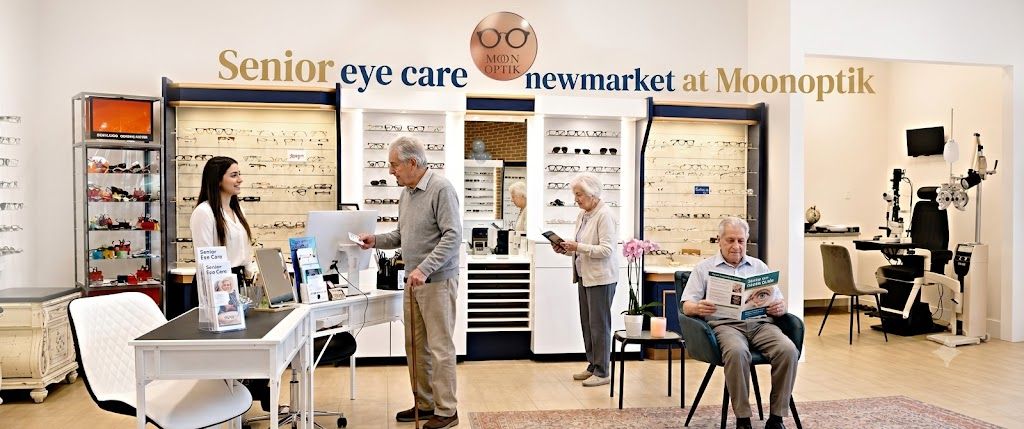
At Moon Optik, we combine advanced diagnostic technology with compassionate, patient-focused care. Every examination is tailored to your individual health history, lifestyle, medications, and visual needs to ensure you receive the highest standard of care.
- Comprehensive eye exams for older adults.
- Early detection of age-related eye diseases.
- Monitoring of glaucoma, cataracts, and macular degeneration.
- Diabetic eye examinations.
- Prescription updates for changing vision.
- Professional guidance for eyewear and lenses.
- Friendly, experienced optometrists.
- Convenient Newmarket location.
We believe every senior deserves clear vision, personalized care, and the opportunity to enjoy an active, independent lifestyle through proactive eye health management.
Plan Your Next Eye Care Visit
For routine appointment enquiries, see our optometrist location in Newmarket and contact our team. Bring your current glasses and a list of questions about changes in your vision.
Frequently Asked Questions
How often should seniors have an eye exam?
Can regular eye exams prevent vision loss?
What eye diseases become more common with age?
Do seniors need new glasses more often?
Does diabetes affect eyesight?
Key Takeaways
- Annual comprehensive eye exams are essential for protecting vision as you age.
- Many age-related eye diseases develop without noticeable symptoms.
- Early detection provides the best opportunity for successful treatment and long-term vision preservation.
- Regular eye care supports independence, safer driving, comfortable reading, and a higher quality of life.
- Moon Optik proudly provides personalized senior eye care for individuals throughout Newmarket.


